
A Secondary School Ran a Case With a Class. Here Is What Happened.
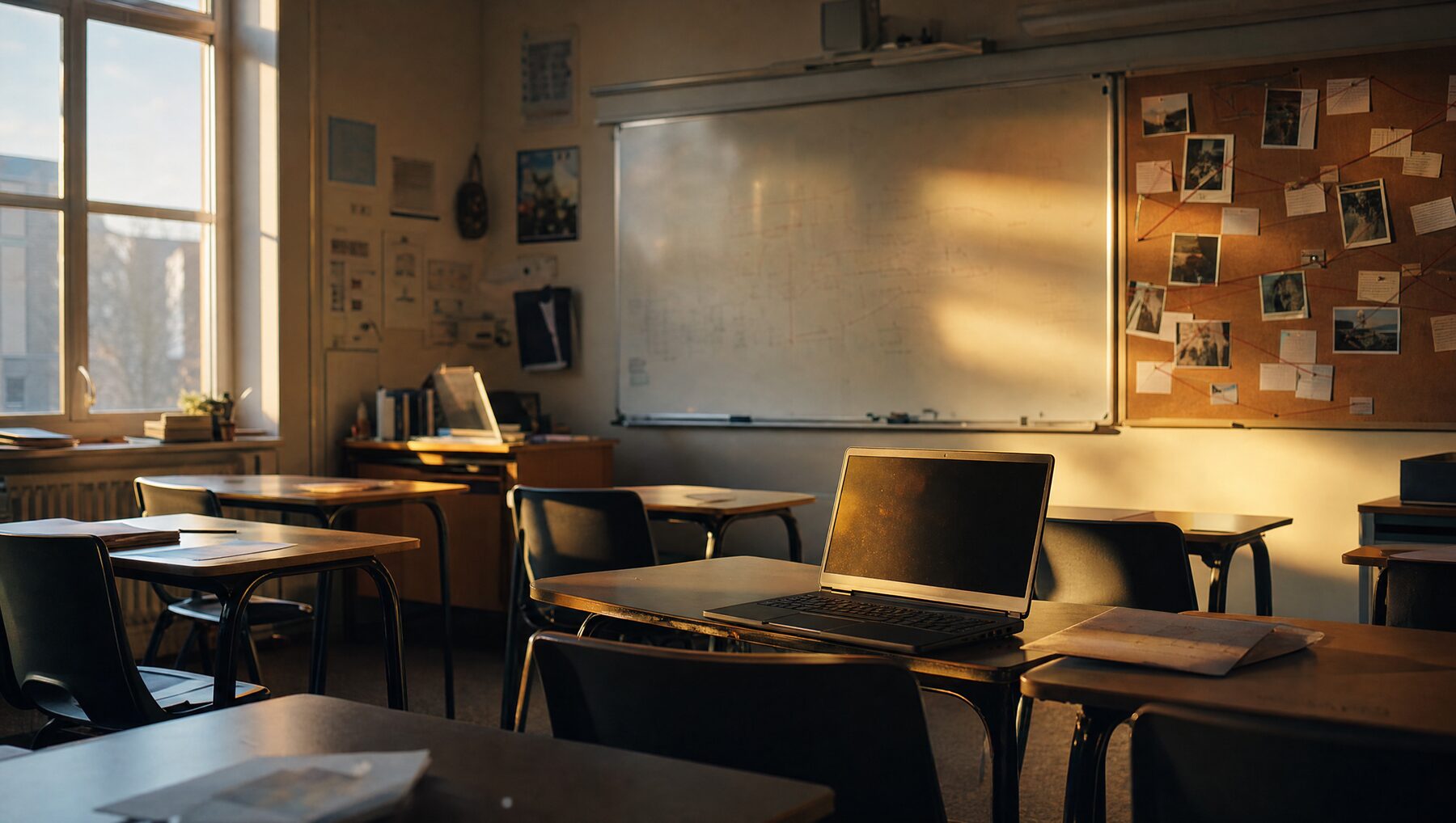
A secondary school got in touch with a simple question: would one of our cases actually hold a class of teenagers for a full lesson? We thought it would, but classrooms are an honest test. A full class, a fixed period, and no way to hide if attention drifts. They chose The Kavali Star and ran it with a class.
It worked, and the part that pleased us most was not that the students enjoyed it. It was what they did while they were playing.
Key findings at a glance
- A class of secondary school students played The Kavali Star, a browser-based detective case, within a single lesson.
- Teachers reported higher engagement than a typical lesson, including from students who usually disengage.
- Students moved away from guessing the obvious suspect and began reading the evidence closely for small details.
- The case required holding several theories at once, testing them, and justifying a conclusion with evidence.
- The school asked for cases designed specifically for classrooms.
- The school also encouraged students to play at home with family and friends, as an alternative to watching television or playing console games.
Why The Kavali Star suited a classroom
Of everything in our catalogue, this one fits a school best, and not by accident.
- It is a theft, not a violent crime. The stakes are a missing object and a group of friends who all had the chance to take it.
- It is set in a school, so the world needs no explaining. Lockers, corridors, a camera that misses ninety seconds, friends covering for each other.
- Everything needed to solve it is present. No outside knowledge, no general knowledge quiz, nothing a student could be disadvantaged by not knowing.
- The decisive clue is a small physical discrepancy, the sort of detail you only catch if you stop skimming and actually read.
- It is self-contained and takes about an hour, which maps onto a lesson.
What the teachers noticed
Three things came back from the school, and all three are about behaviour rather than entertainment.
Engagement went up. Students who normally drift stayed with it, because the game gives you something to do rather than something to watch. You cannot passively consume a case. Nothing moves until you go and look at something.
They started paying attention to the small details. The first instinct of most players, students and adults alike, is to skim the evidence and jump to whoever looks guilty. A case punishes that gently and immediately: the obvious suspect has an answer, and the story only cracks when somebody goes back and reads the boring document properly. Watching a class learn that in real time is the whole point.
It pushed them to think outside the box. The answer is not at the end of a straight line. It sits at the intersection of two unremarkable pieces of evidence that mean nothing apart, so students had to hold several ideas at once, test them, and drop the ones that did not survive. That is a genuinely different mental posture from answering questions with known answers.
The classroom skills hiding inside a whodunit
None of this was designed as an educational product, which is probably why it does not feel like one. But the things a case demands are the things a lot of lessons are trying to teach.
- Reading closely, including the dull parts, because the dull parts are where the discrepancy lives.
- Distinguishing what the evidence says from what you assumed it said.
- Justifying a conclusion out loud, to classmates who will argue back.
- Changing your mind when a fact contradicts your theory, which is harder than it sounds and worth practising.
- Working as a group without one confident voice steamrollering the rest, because the confident voice is often wrong in a good case.
What the school asked us to build next
Two things, and we are taking both seriously.
First, cases built for schools rather than borrowed by them. Written with a classroom in mind: a lesson-shaped length, settings and stakes pitched for students, and a structure a teacher can pause, split across groups and pick back up.
Second, and this was the part we did not expect, they wanted their students playing at home. Not as homework, but as an alternative. The school's view was that an hour spent arguing about evidence with a parent or a sibling is a better hour than another episode of a series nobody will remember, or another evening on a console. A case gives a family something to do together that is not a screen each in separate rooms.
That is a fair description of what we are for. A case is a good evening with people in the same room, and it happens to make you think.
Running a case with your own class
- 01Play the case yourself first. You will want to know where the sticking points are before a whole class hits them at once.
- 02Decide the format: one case projected for the whole class, or small groups each working a copy.
- 03Read the briefing together so everyone starts from the same facts.
- 04Split the evidence. Give groups a suspect or a document each and make them report back, which forces them to explain rather than just point.
- 05Make them vote before submitting a verdict, and make somebody defend it with evidence.
- 06Debrief on the reasoning, not the answer. Who changed their mind, and what changed it?
Practically, there is nothing to install. It runs in a browser on a laptop, tablet or an interactive whiteboard, a case is two pounds, and there is no subscription.
If you teach and you are thinking about trying this, or you want to tell us what a case built for your classroom would need, write to info@it-msp.net. The school in this story shaped what we build next simply by asking.
See the cases, and try one before you take it to a class.
Start a caseFrequently asked questions
What happened when a school used a detective game with students?
A secondary school ran The Kavali Star with a class in a single lesson. Teachers reported higher engagement than usual, students paying closer attention to small details in the evidence rather than guessing the obvious suspect, and more reasoned debate. The school then asked for cases built specifically for classrooms and encouraged students to play at home with family and friends.
Can you use a detective game in the classroom?
Yes. A secondary school ran our Kavali Star case with a class and reported higher engagement, closer attention to detail and more reasoned debate. It runs in a browser with nothing to install, takes about an hour, and works either projected for a whole class or played by small groups.
Which Detectively case is best for students?
The Kavali Star. It is a theft rather than a violent crime, it is set in a school so the world needs no explaining, and everything needed to solve it is in the evidence, so no student is disadvantaged by outside knowledge. Teachers should always play a case themselves first to check it suits their group.
How long does a case take in a lesson?
About an hour, which fits a standard lesson. The case is self-contained, so there is no homework tail and nothing to carry over unless you want to split it across two sessions and debrief in the second.
Do students each need an account?
No. A case can be played on one shared screen for a whole class or a group. Each play uses one case token, which is two pounds, so a class working on a single projected case needs one.
Are you building games specifically for schools?
It is on the roadmap, at a school's request. If you teach and want to shape what those look like, email info@it-msp.net and tell us what your classroom would need.